
Largo · Pinellas County, FL
Brazilian Pepper & Australian Pine Removal in Largo, FL
Brazilian pepper swallows back fences and creek edges, and Australian pine is one of the weakest trees in a Florida wind. Both are Category I invasives, most local codes waive the fees or the permit for them, and both come back if the job is done halfway. We clear them, grind what we can and haul every stem.
Mon–Sat 7am–6pm · Storm calls taken

- Status
- FISC Category I invasives
- Largo permit
- Required, no fee, no replanting
- Thickets
- Priced by crew-day
- Included
- Chipping and haul-off
Brazilian Pepper Removal in Largo: Know the Plant
Brazilian pepper rarely shows up as one neat tree. It arrives as a seedling dropped by a bird along a chain-link fence or a drainage swale, and within a few years it is a tangle of leaning, multi-stemmed trunks with red berries in winter. In Largo it crowds the backs of lots that border the McKay Creek greenway, retention ponds and the edges of older mobile-home parks, where nobody mows behind the sheds.
- Status: Category I on the Florida Invasive Species Council list, a state noxious weed, and on Pinellas County's Tier 1 list for mandatory removal during site development.
- Growth habit: sprawling stems that root and resprout, so a single plant can become a thicket covering a whole fence line.
- Why it matters: it shades out natives, buries fences and sheds, and hides drainage problems until the swale backs up.
Australian Pine Removal in Largo: A Wind Problem
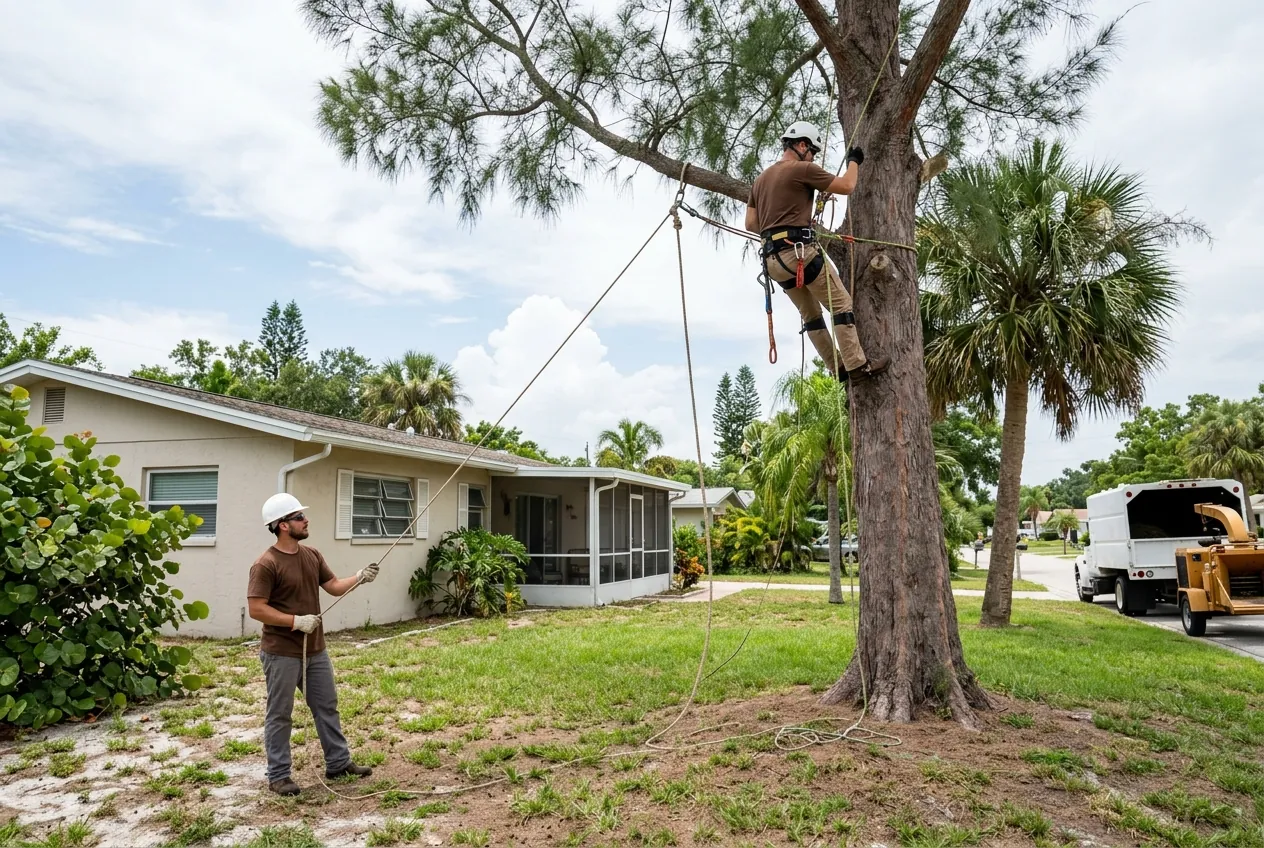
Australian pine is not a pine. It is a Casuarina, a flowering tree with drooping, needle-like green twigs that only look like pine needles. UF/IFAS ranks it among the lowest of common Florida trees for wind resistance. A tall one next to a house in Seminole or a beach lot in Indian Rocks Beach is one of the riskiest trees we see.
- Status: It shares the Category I rating and sits on the county's Tier 1 list too. Homes with one to three units that already exist don't have to remove it, but the county lets owners take it out on a permit that costs nothing.
- Size: these get tall and heavy, and the big ones often call for heavy rigging, and near a roof we bring crane work when the job needs one into the plan.
- Litter: the fallen twigs mat the ground so little else grows underneath.
Invasive Tree Removal Rules Around Largo
This is one of the few areas where the codes mostly agree, and in your favor. Even so, the paperwork differs by city:
- City of Largo: state-listed invasives go through the permit process, yet the city charges nothing and asks for no replacement.
- Unincorporated Pinellas (Ridgecrest, Bardmoor, Walsingham and Oakhurst, Harbor Bluffs): invasives are rated Grade 0, which means a permit at no cost and no replants.
- Pinellas Park: Australian pine and Brazilian pepper are on the city's list of plants that do not count as trees, so no permit.
- Seminole: both are exempt nuisance trees under the city code.
- Indian Rocks Beach: no city permit is needed for either one.
The one caution: if a thicket grows into a mangrove fringe or a wetland edge, the mangroves keep their protection no matter what is tangled around them. We cut the invasives and leave the mangroves alone, and we tell you who regulates the rest. For the full rules story, read our Brazilian pepper and Australian pine guide.
Brazilian Pepper and Australian Pine Removal: Why They Come Back
Cutting Brazilian pepper at the ground is the start of the job, not the end. The stumps resprout from the base and the roots, often within weeks, and the seed bank in the soil keeps germinating. UF/IFAS guidance treats a herbicide applied to freshly cut stumps as the standard follow-up when these trees are removed.
Herbicide application is regulated work, and our quote will say plainly whether stump treatment is part of it. When it is not, there are still three things that make a real difference:
- Grind the main stumps below grade, which removes the crown that most resprouts come from.
- Pull or cut back new shoots during the first growing season, before they harden off.
- Replant the cleared strip quickly with something that shades the ground, so seedlings have less light to work with.
Australian pine stumps are less stubborn, but they are often large, and grinding them is the cleanest way to reclaim the space. Our stump grinding bands apply.
Invasive Tree Removal Along Largo Creeks, Ponds and Beach Lots
Swales and greenway edges
The county's master plan for the greater Ridgecrest area describes the McKay Creek greenway as a chain of swales and wetland pockets between Taylor Lake and the Walsingham Reservoir. Back lots along that kind of edge are prime pepper ground. Before we cut near water, we look for mangroves, buttonwoods and wetland plants that are protected on their own, and we keep the work on your side of the line. Cutting pepper out of a swale also helps the water move, but we leave any grading or ditch work to the drainage authority.
Fence lines in parks and older subdivisions
In many 1970s neighborhoods and manufactured-home communities, the strip between the back fence and the next lot belongs to nobody in particular, and pepper fills it. If the growth is on common ground, the park or association decides who removes it. Check your lease or the association rules, and we will quote the board or the resident, whichever is responsible.
Beach lots
On the islands, tall Australian pines often stand right beside homes and condo buildings. Belleair Beach's code bars planting Australian pine and Brazilian pepper in some of its zoning districts, which tells you how the towns view them. Dune vegetation on the Gulf side of Florida's Coastal Construction Control Line is a separate matter, and we check before cutting anything in the dunes.
Brazilian Pepper Removal Cost in Largo
Single trees are priced like any other removal, by trunk diameter. Thickets with dozens of stems are priced by the crew-day after we walk the fence line, because counting stems in a tangle is guesswork.
| Job | Typical range | What moves the price |
|---|---|---|
| Brazilian pepper / Australian pine | priced as removal by trunk size; thickets by crew-day, written quote | stem count, regrowth |
| Tree removal, trunk under 12 in | $275–$650 per tree | drop zone, fence or pool cage, haul-off |
| Tree removal, trunk 12–24 in | $625–$1,450 per tree | rigging vs open drop, backyard access |
| Tree removal, trunk 24–36 in | $1,350–$2,900 per tree | limbs over roof or carport, climb + rigging |
| Tight-access surcharge (behind fences, mobile-home lots, no truck access) | +25%–45% | carry-out distance, hand-lowering |
| Stump grinding, 12–24 in | $160–$320 | surface roots, depth |
Ranges are typical for Largo in 2026 and are not quotes; the written price after a free visit is the one that counts, and it covers chipping and hauling every stem. Thicket clearing is not land clearing: we work by hand and with climbing gear on residential lots, not with land-clearing machinery.
What we need from you before a thicket job
- Where the property line actually runs. Many pepper thickets straddle two lots, and we only cut on yours unless the neighbor signs off.
- Any fence, shed or irrigation buried in the growth that you want kept.
- If you plan to replant, so we leave the ground ready for it.
After the Invasive Tree Removal
A cleared pepper strip is an opening. City residents may request a pair of free native trees through Adopt-a-Tree; red cedar, slash pine, magnolia and live oak are on the list. On beach lots, sabal palms and sea grapes stand up to salt far better than anything that came out. Keep the new plantings clear of the service drop and the roofline, and a later tree trimming visit stays small.
If you have a mix of jobs, a queen palm here and a dead oak there, we price them together on one visit. Our Largo tree removal homepage covers the rest of what we do.
Brazilian Pepper & Australian Pine Removal Questions
Asked on Largo driveways.
Yes. The state ranks Brazilian pepper as a Category I invasive and lists it as a noxious weed. Largo asks for a permit, at no charge and with no replacement; Pinellas Park, Seminole and Indian Rocks Beach do not require a permit for it.
Outside city limits, the county allows Australian pine removal on a permit with no fee. Largo requires a fee-free permit; Pinellas Park, Seminole and Indian Rocks Beach exempt it. We check the parcel.
Often, yes. Cut stumps resprout, and seeds already in the soil keep coming up. Grinding the main stumps, cutting new shoots the first season and replanting help, and UF/IFAS considers cut-stump herbicide the standard follow-up. Your quote states whether treatment is included.
Single trees follow our removal bands by trunk size, such as $275–$650 under 12 inches. Thickets are quoted by the crew-day after a walk-through, with chipping and haul-off included.
Pinellas County's mandatory-removal rule for Tier 1 species applies to site development; existing one- to three-family homes are exempt. Removing them is usually a good idea, but not a legal duty for most homeowners.
We can remove the pepper, but mangroves stay. Largo bars mangrove removal outright, and trimming them is regulated by Pinellas County. We will tell you the rules before any work starts.
Read Next
From the Largo tree notes.

Brazilian Pepper and Australian Pine in Pinellas: Removal Rules, Permits & Why They Come Back
Both trees are on Florida's worst-invasive list. Here is what that means for permits in Largo and nearby towns, why a cut pepper comes back, and how removal is priced.
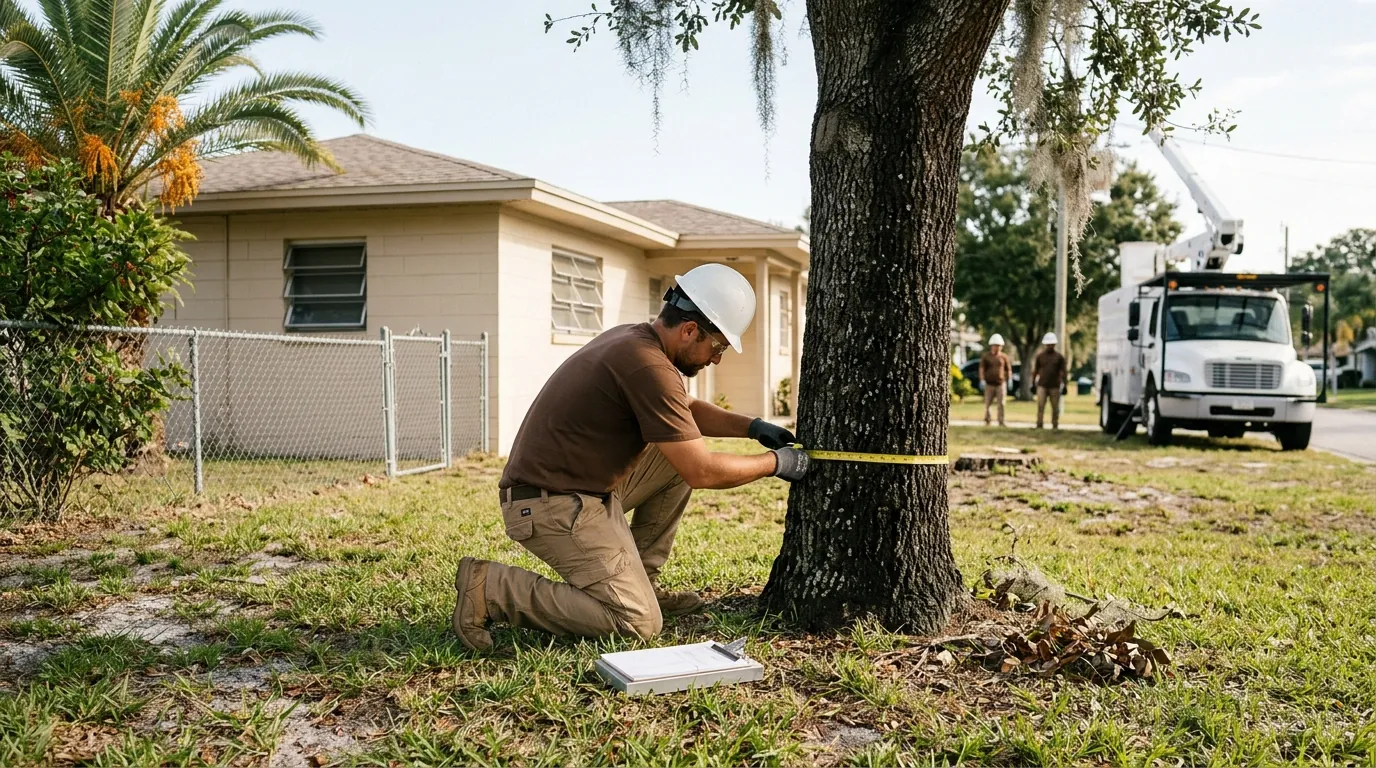
City of Largo Tree Removal Permit (2026): Sizes, the $20 Fee, Free Permits for Dead Trees & When Your Address Is Really the County's
Which Largo trees and palms need a city permit, what it costs, when it is free, when a replacement tree is owed, and how to tell if your Largo address follows county rules instead.
More Tree Services in Largo
The rest of the crew’s work.
Brazilian Pepper & Australian Pine Removal Around Largo & Pinellas
Largo, its neighborhoods and nearby towns.
Clear the Fence Line for Good
Cut, ground, hauled and gone.
- Hours
- Mon–Sat 7am–6pm
Storm calls taken - Every price
- Free, on site, written before work
- Every job
- Cleanup and haul-off included
Free written estimate
Describe the tree and the street it’s on. Someone from the crew reads each request and calls or texts back Mon–Sat.
Request received
Got it. Someone on the crew will read your note and get back to you Mon–Sat 7am–6pm. Tree down on a roof or carport right now? Call (727) 624-0396.
A picture of the tree speeds up the price: send it by text.