In this article
- Sea Grape Trimming and Florida Law
- The Coastal Construction Control Line and Dune Vegetation
- Beach Tree Rules Town by Town, Indian Rocks Beach to the Redingtons
- Mangrove Edges on the Intracoastal Side
- Salt Damage After a Surge: Wait Before You Remove
- Choosing Salt-Tolerant Trees for a Beach Lot
- What a Gulf-Front Tree Job Looks Like With Us
The barrier-island towns west of Largo share a coastline, not a rulebook. A sea grape hedge, a row of sabal palms and a dune line can each fall under different rules on the same lot, set by the state, the county and the town. This guide sorts them out for owners and condo boards from Indian Rocks Beach south to the Redingtons. It is not a substitute for checking your parcel, and for any Gulf-front job we look up where the state line sits before quoting.
Sea Grape Trimming and Florida Law
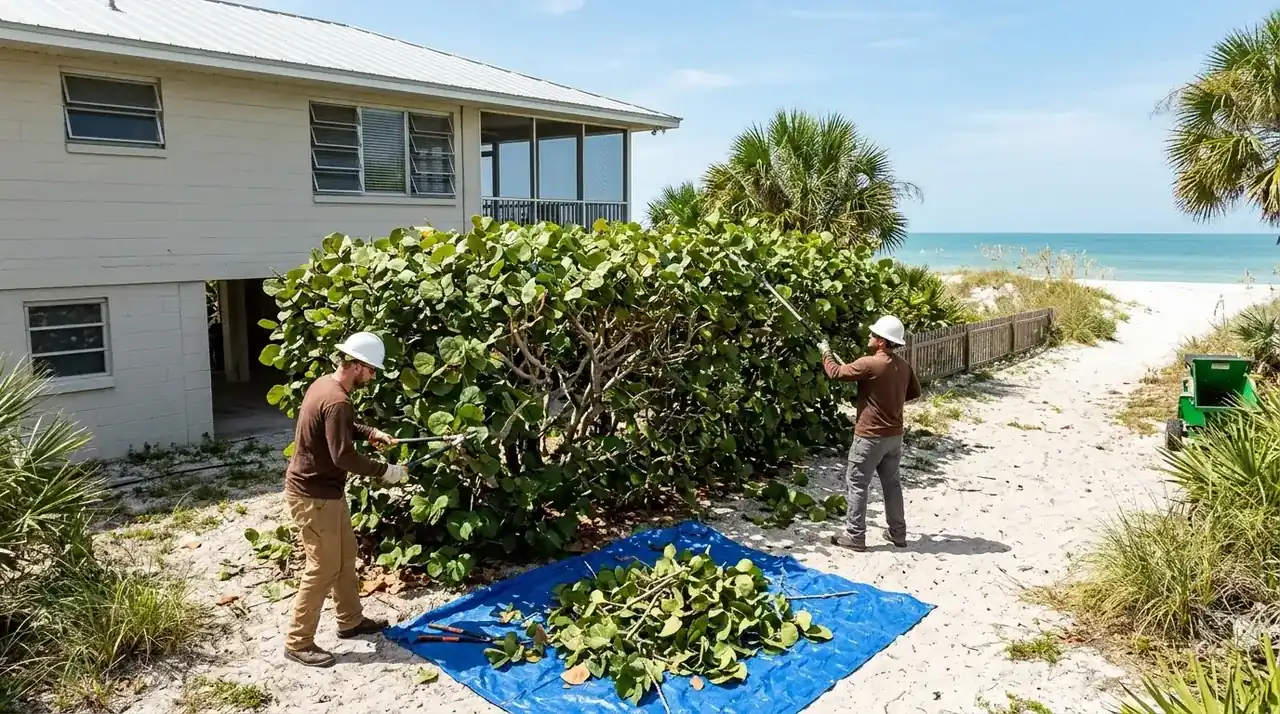
Florida Statute 161.242 says its purpose is to protect the state's beaches and shores from erosion by keeping the natural plant cover that binds the sand. To do that, it bans cutting, harvesting, removing or eradicating sea grapes (Coccoloba uvifera) and sea oats anywhere on public land; on private land the same acts are unlawful only when the owner, or whoever lawfully holds the land, hasn't agreed. Possessing those plants on land you don't own is treated as evidence of a violation, and licensed nursery growers selling plants they propagated are exempt.
- On land you own, you can prune or even remove your sea grapes as far as this statute goes. Other rules (the CCCL below, your town code, your association) may still apply.
- On the public beach, a dune walkover, a beach access or a town park, sea grapes are off-limits. A view that is blocked by public sea grapes is not something a private crew can fix.
- On a neighbor's lot, it takes the neighbor's consent, in writing if you want to avoid an argument later.
- On condo or HOA ground, the association is the owner, so the consent comes from the board.
The Coastal Construction Control Line and Dune Vegetation
Florida Statute 161.053 sets a Coastal Construction Control Line along sandy Gulf beaches. Once the line is established, no one may damage a sand dune, or the vegetation growing on it, seaward of the line without a permit from the Florida Department of Environmental Protection. The statute lists exemptions FDEP may grant, including maintenance of existing beach-dune vegetation and removal of debris without disturbing the existing topography or dune plants, and FDEP can issue general permits for activities like landscaping.
| Work on a Gulf-front lot | Where it sits | What that usually means |
|---|---|---|
| Trimming sea grapes or palms near the house | Landward of the CCCL | State dune rule does not reach it; sea grape law and town code still apply |
| Pruning existing dune plants to maintain them | Seaward of the CCCL | May fall under the statute's maintenance exemption; confirm with FDEP |
| Cutting back or clearing dune vegetation | Seaward of the CCCL | FDEP permit needed |
| Clearing storm debris off the dune | Seaward of the CCCL | Allowed only without disturbing the sand or dune plants |
Where the line runs on a particular lot is a map question, not a guess. FDEP's CCCL program publishes it, and its staff field questions at [email protected]. We check before any Gulf-front work, and if a job needs an FDEP permit, the owner applies for it before we schedule.
Beach Tree Rules Town by Town, Indian Rocks Beach to the Redingtons
| Town | Tree permit | Palms | Worth knowing |
|---|---|---|---|
| Indian Rocks Beach | Free city permit once a trunk reaches 4 in DBH (multiple trunks summed) | Only cabbage (sabal) palms count | Tree crews register with the city ($10) and show liability insurance; owners who hire a vendor must have it haul the waste |
| Belleair Beach | Exempts itself from the county tree ordinance; no city removal permit found, so we confirm with City Hall | No new planting but palms (Washingtonia excluded) inside 30 ft of the seawall or shore | Waterfront trees have to stay pruned enough to keep the next-door owner's view of the water open |
| Belleair Shore | Pinellas County permits | County protects palms about 6 ft and up | Entirely Gulf-front, so the CCCL matters on every lot |
| Indian Shores | Town code adopts the county ordinance; county permit for trees on the county protected list | Per county | We confirm with the town and county before work |
| Redington Shores, Redington Beach, North Redington Beach | Town tree codes not yet reviewed by us; we confirm with the town | Confirm with the town | Debris program closed in mid-December 2024; private haulers only |
Indian Rocks Beach details
Indian Rocks Beach lists sea grape among its salt-tolerant beach plantings and has no separate sea grape trimming rule in its vegetation code, so state law governs the sea grapes themselves. Its code also counts heavy trimming that severely alters a tree's natural function as "effectively removing" it, which takes the same free permit. Topping is banned on street, park and public trees, and limbs over sidewalks must clear 8 feet. Normal trimmings go out in 3-foot lengths with limbs no thicker than 4 inches, up to a cubic yard; the remains of a full tree removal are a paid special pickup with a $50 minimum, which is one reason our price includes haul-off.
Belleair Beach's view rule
Belleair Beach is unusual in writing views into its code. Owners on the water must keep their trees pruned so the adjoining lot's water view stays clear, and new waterfront planting within 30 feet of a seawall or shoreline is limited to palms other than Washingtonia. That steers replanting toward sabals and away from tall fan palms and shade trees on the water side.
Mangrove Edges on the Intracoastal Side
Bay-side lots in these towns often meet mangroves rather than dunes. Mangroves are protected under state law, and Pinellas County administers trimming here under delegated authority: owners may trim down to a 6-foot minimum height, any mangrove taller than 10 feet calls for a trimmer on the county's professional registry, and the permitted season runs March 1 to November 30. The state act leaves buttonwood out of its mangrove definition, yet county and Indian Rocks Beach codes still protect it. We do not trim or remove mangroves; we'll tell you the rules and who's registered. Indian Shores also reminds owners that storm debris lodged in mangroves is theirs to remove, while trimming the mangroves stays regulated.
Salt Damage After a Surge: Wait Before You Remove
During Helene, USGS sensors measured about 7 feet of surge above high tide at both ends of this stretch, 6.75 ft at Clearwater Beach and 7.26 ft at Madeira Beach, and many beach-lot palms and shrubs browned out in the weeks after. UF/IFAS advice is to be patient: salt spray rinses off, but flooding with salt water kills most plants, salt concentrates as soil dries, and a palm may show no new frond for six months or longer. The safer call on a salt-burned tree is to wait for new leaves before deciding to remove it, unless it is leaning, split or threatening the house. Sea grapes and sabal palms sit near the top of the Pinellas salt-tolerance list for a reason.
Choosing Salt-Tolerant Trees for a Beach Lot
Pinellas County's UF/IFAS Extension office, on the Florida Botanical Gardens campus in Largo, ranks these among the most salt-tolerant choices for local yards:
- Sabal (cabbage) palm, the state tree, and the one palm Indian Rocks Beach regulates.
- Sea grape, already on Indian Rocks Beach's and Belleair Beach's planting lists.
- Buttonwood, protected by county and Indian Rocks Beach codes once planted.
- Yaupon holly, southern red cedar and Paurotis palm for screens and smaller spaces.
What a Gulf-Front Tree Job Looks Like With Us
- We look up the parcel's town, the CCCL and any mangrove edge before the visit.
- On site, we mark which plants are yours, which are the town's or the public's, and which sit seaward of the line.
- You get a written price and a list of any permits the owner or association needs to pull first.
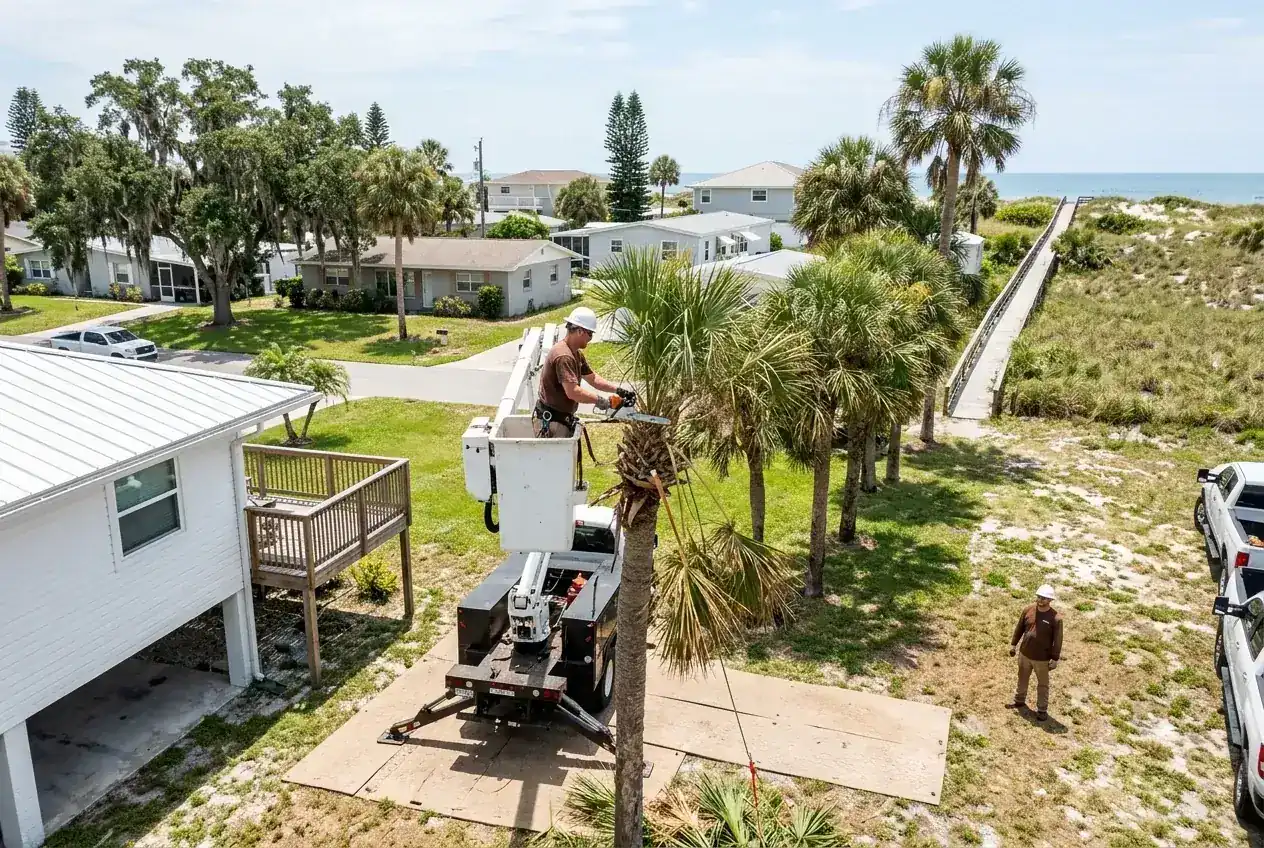
- We trim from the landward side where we can, keep equipment off the dune, and haul every branch off the island.
For palm work on a beach lot, our palm trimming service and palm removal service explain the details. Condo boards on Gulf Boulevard will find the permit side covered in our HOA and condo tree guide, and inland owners can compare the city's rules in our Largo permit guide. Start a quote through the estimate form, or read about our tree service in Largo and the beach towns.